
3 Circles

3 Circles
Preached by Pastor Chad Rickenbaker on November 1, 2026 [watch online] | Genesis 1:31
10,000 Gospel Conversations — “3 Circles”
Then God saw everything that He had made, and indeed it was very good. So the evening and the morning were the sixth day. —Genesis 1:31 (NKJV)
I don’t know how you feel about road trips. Our family hasn’t taken many long ones together, but when you do take a road trip as a family, it often becomes a bonding experience. Even when it doesn’t go perfectly, it still bonds you. Sometimes the adversity along the way actually makes it stronger. After it’s over, you laugh about the unexpected things that happened.
I’ve seen the same thing in the life of the church. A mission team goes on a trip together, overseas or here at home, and when they come back and share about it, you can tell it has created a bond within the group. If I didn’t go on that trip, I hear their stories and feel like I missed out.
So here is what I want to tell you: our church is on an amazing journey, and I don’t want you to ever feel left out. There is an open invitation for you to come and go with us. We are on a journey toward 10,000 gospel conversations, and the journey has already started. On our church website’s homepage there is a banner where you can click and record your gospel conversations. This isn’t a competition. We do it so we can rejoice and celebrate together, because we want everybody to hear about Jesus.
Where We’ve Been: Attitude and Action
For the last few Sundays we’ve been looking at the apostle Paul, a great communicator of the gospel. Two weeks ago we saw that Paul had the right attitude. Jesus called him to be a witness to the Gentiles (Acts 9), and Paul knew he was under obligation (Romans 1:14). We have that same obligation, because God has called us to make disciples and be His witnesses. Paul’s attitude was eager obedience. He didn’t go begrudgingly. He went eagerly.
Paul also had a confident boldness, and his boldness wasn’t in his intelligence or his eloquence. It was in the gospel itself:
For I am not ashamed of the gospel of Christ, for it is the power of God to salvation for everyone who believes, for the Jew first and also for the Greek. —Romans 1:16
He didn’t need a perfect presentation. He only needed to present the gospel, because the power is in the gospel.
Last Sunday we saw Paul’s actions. He cultivated a desire for gospel conversations: he wanted to “have some fruit” among the Romans (Romans 1:13). He prayed for the salvation of the lost. So who’s on your list? If there’s no one on your list, you need a list: family members, neighbors, coworkers, the person in the checkout line. And he was able to explain the righteousness of God. God is righteous and we are not. We can’t be good enough or religious enough. But when we believe on Jesus Christ as Lord and Savior, God takes our sin and gives us the perfect righteousness of Jesus.
Where Do I Begin?
You may be thinking, “Pastor, you can rattle these things off. I can’t do that. Where do I begin?”
Over the years, many people and ministries have developed ways to present the gospel. I won’t say created, because the gospel belongs to God. The Billy Graham Association has Steps to Peace with God. Evangelism Explosion, developed by D. James Kennedy at Coral Ridge Presbyterian Church, is the Cadillac of them all. Bill Bright of Campus Crusade developed the Four Spiritual Laws. Bobby Welch at First Baptist Daytona Beach developed FAITH. And there’s the Romans Road, which walks through marked verses in Romans.
For our purposes, we’re going to use one developed by Pastor Jimmy Scroggins called the 3 Circles. I like it for several reasons. First, he decided it would never be monetized and never copyrighted. Anybody can use it and adapt it. How dare we monetize the gospel?
Second, I like where it begins. Some presentations open with a question like, “If you were to die today, do you know for certain you would go to heaven?” Or, “If you stood before God and He asked why He should let you into His heaven, what would you say?” Those are good questions, but they make assumptions: that the person believes there is a God, a heaven, and a judgment. More and more, we will be talking with people who don’t share those assumptions.
The Transition
So where is the point of commonality? Jimmy Scroggins picked up on something we all recognize: we live in a broken world. If you talk to anyone long enough, they will tell you about a problem. It might be a broken relationship, a health problem, trouble at work, or money.
When someone shares a problem with you, here is the transition: “I’ve never had that exact problem, but can I share with you what I’ve learned that’s helped me when I face difficulties?”
What if they never mention a problem? Just ask about something in the headlines: the war with Iran, the riots in Europe, the upcoming election, gas prices. If you ask, have the courtesy and genuineness to let them answer. This is about caring for people, not setting them up. Once they’ve shared, you can ask, “As I’ve watched these things happen, can I share something that’s helped me think differently about them?” If they agree, you’re ready to talk about the gospel.
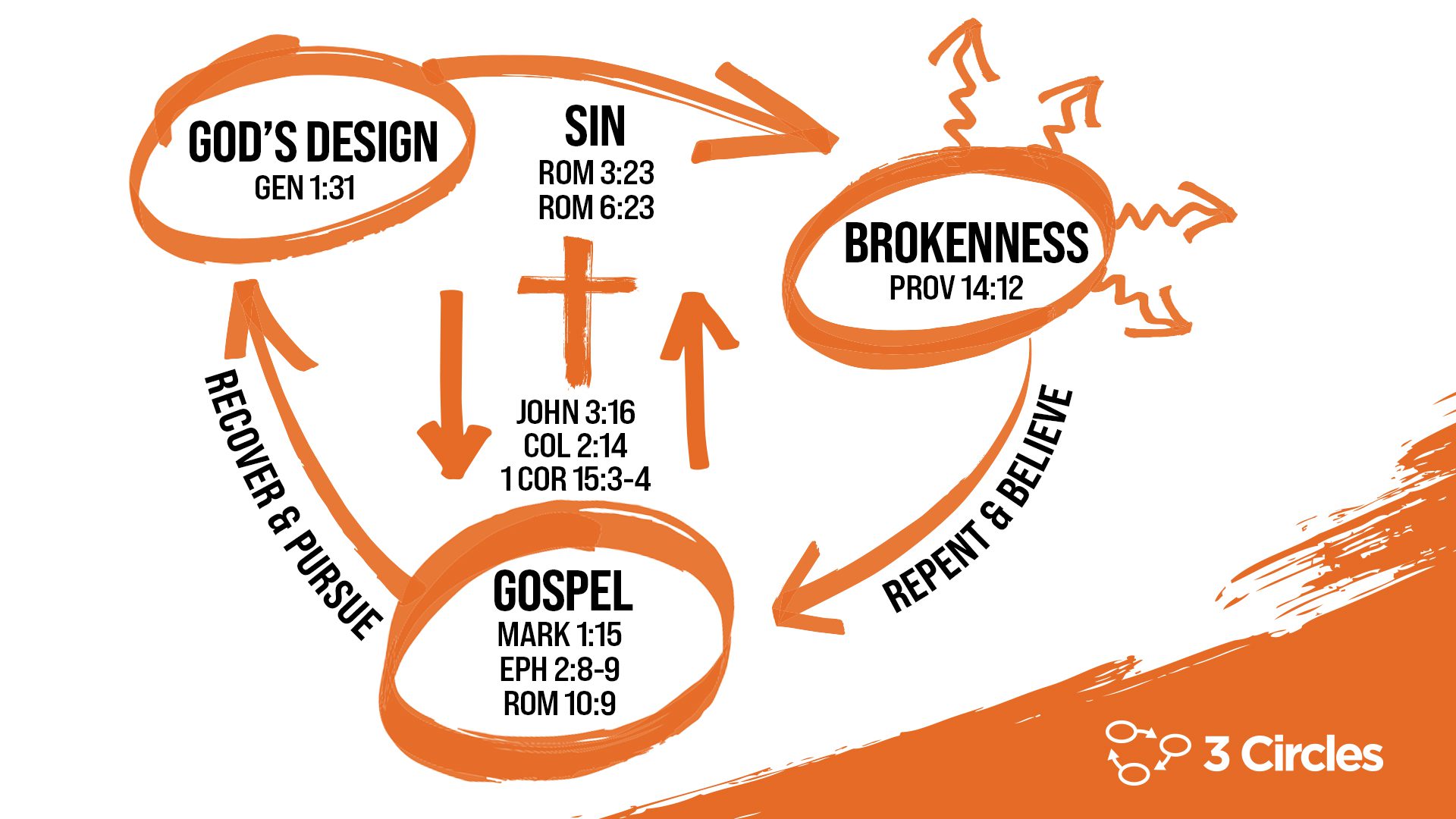
God’s Design
We live in a broken world. We see it in broken political systems and broken relationships, and we feel it in our health and our work. We go through life trying to figure out how to make it work.
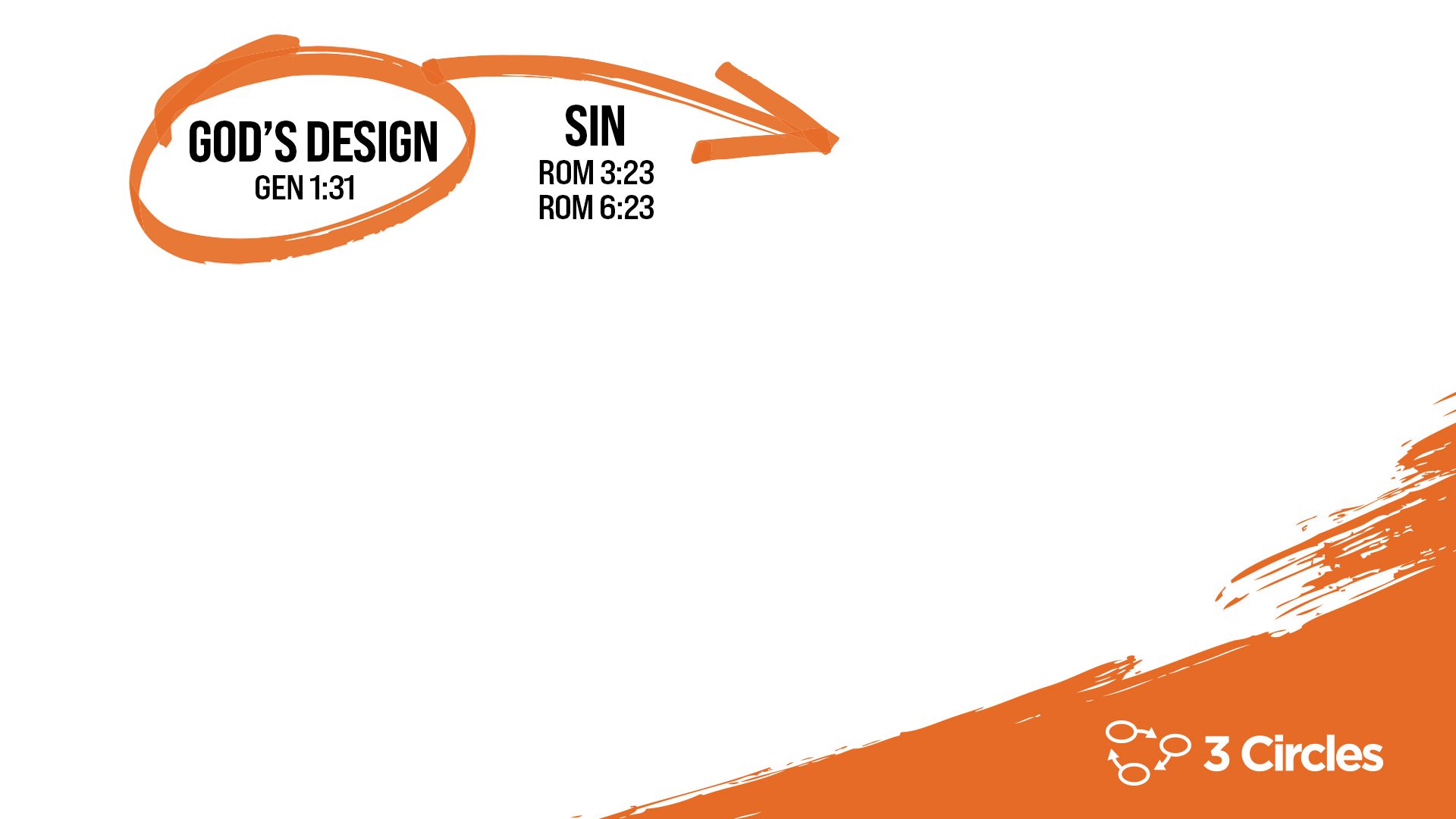
Even in a broken world, we can still see beauty. We can see purpose and design. And God’s Word tells us that God has a design. When He looked at all He had made, He said it was very good (Genesis 1:31).

Sin
If there’s a design and it’s supposed to be good, then something has happened. What happened is that you and I tend to depart from God’s design, and the Bible calls that sin. We’ve all done it:
for all have sinned and fall short of the glory of God, —Romans 3:23
And there is a consequence for leaving God’s design:
For the wages of sin is death, but the gift of God is eternal life in Christ Jesus our Lord. —Romans 6:23
This death is spiritual death, separation and alienation from God.
Brokenness
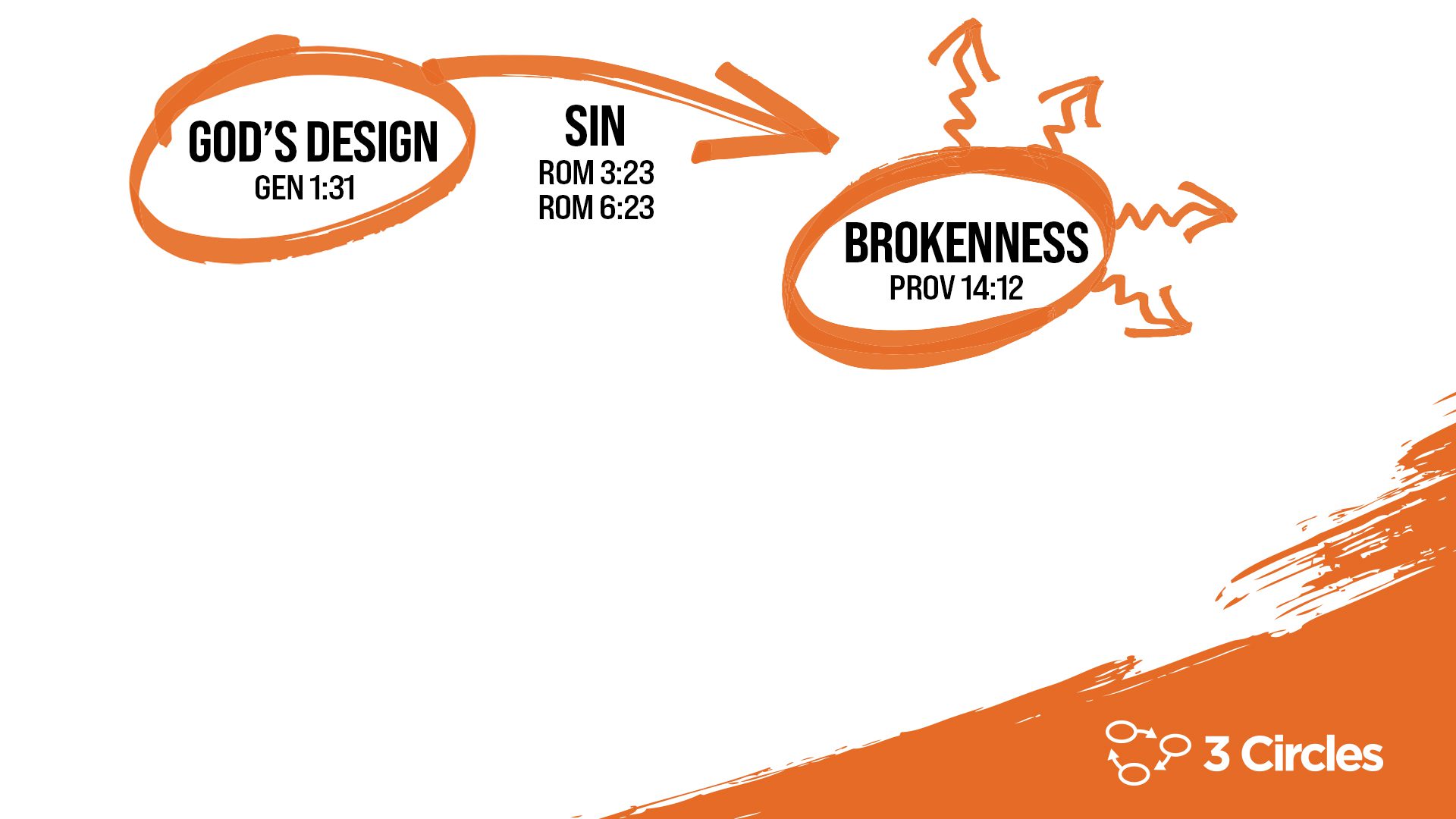
Departing from God’s design leads to brokenness. We feel it as shame, guilt, and anxiety. We feel it in relationships that don’t work the way they should.
So we try to fix it or soothe it. We work harder and longer, thinking enough money in the bank will fix it. We lose ourselves in hobbies. We look for approval from a certain person or try to be popular or make the grades. When none of that works, maybe we finally try to numb it with drugs or alcohol. It numbs the pain for a while, but when you sober up, the brokenness is still there.
We need something from outside of ourselves:
There is a way that seems right to a man, but its end is the way of death. —Proverbs 14:12
The Gospel
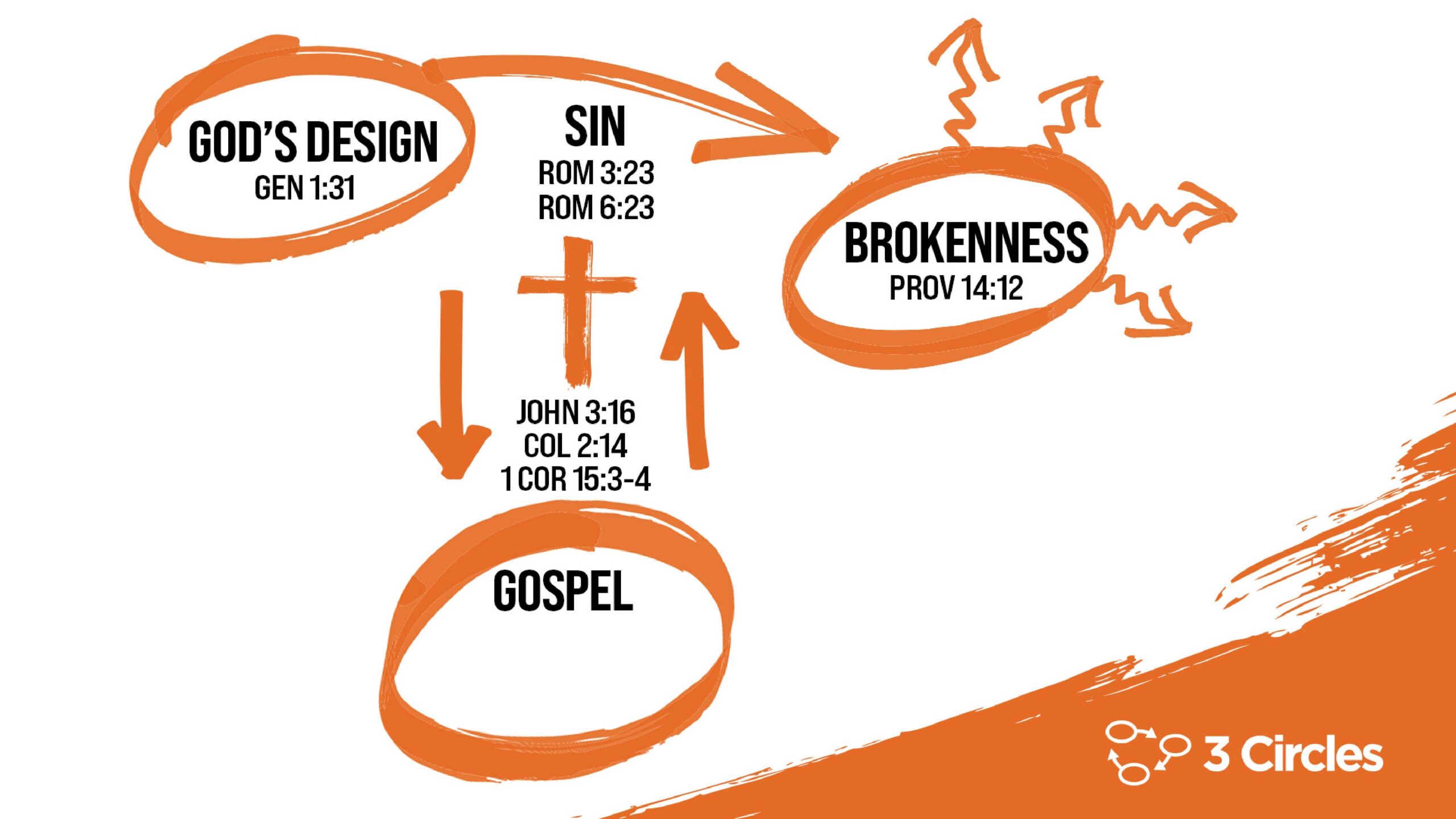
The answer God provides is the gospel, which simply means good news. Because we departed from Him, God sent His Son:
For God so loved the world that He gave His only begotten Son, that whoever believes in Him should not perish but have everlasting life. —John 3:16
When Jesus came, He did what we couldn’t do. He lived perfectly according to God’s design, and that qualified Him to die on the cross as our sin bearer and our substitute:
having wiped out the handwriting of requirements that was against us, which was contrary to us. And He has taken it out of the way, having nailed it to the cross. —Colossians 2:14
They took His body down and laid it in the grave, and on the third day God raised Him from the dead. His story doesn’t end at the cross or the grave:
For I delivered to you first of all that which I also received: that Christ died for our sins according to the Scriptures, and that He was buried, and that He rose again the third day according to the Scriptures, —1 Corinthians 15:3–4
Repent and Believe
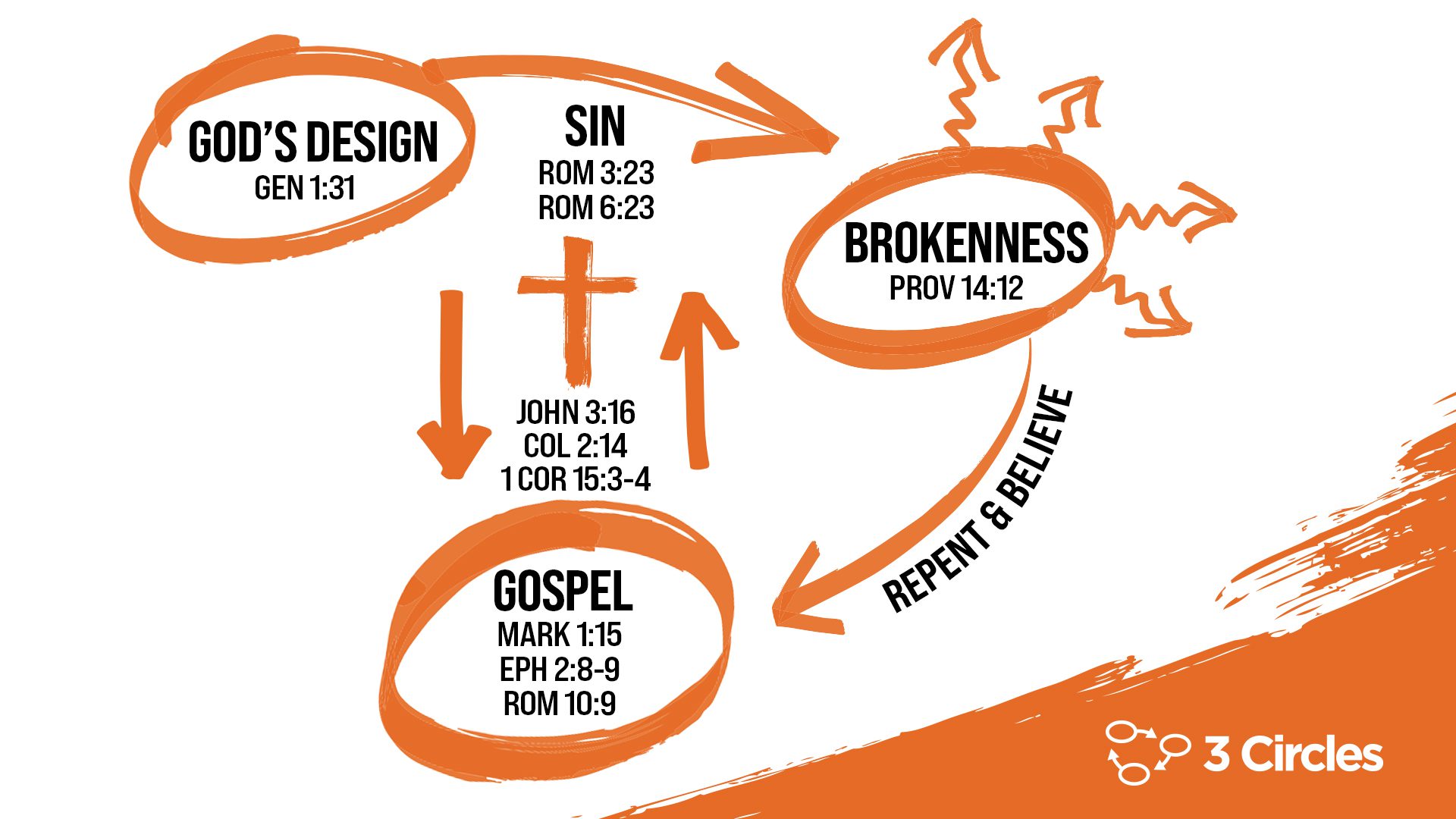
But it’s not enough to know this. The Bible tells us how to respond:
and saying, “The time is fulfilled, and the kingdom of God is at hand. Repent, and believe in the gospel.” —Mark 1:15
To repent means to change direction. We had moved away from God’s design. Repenting means we stop moving away and turn back toward it. And we receive this by grace, not by our own work:
For by grace you have been saved through faith, and that not of yourselves; it is the gift of God, not of works, lest anyone should boast. —Ephesians 2:8–9
Recover and Pursue
When we repent and believe, we are restored to a right relationship with God, and we can pursue and recover His good design again. We don’t do that in our own strength:
for it is God who works in you both to will and to do for His good pleasure. —Philippians 2:13
I can’t pursue this in my own strength, and neither can you. We move toward His design with the help of His Spirit.
What Do I Do Now?
Maybe, as you walk someone through this, they say, “This makes sense. What do I do now?” Take them to Romans 10:
that if you confess with your mouth the Lord Jesus and believe in your heart that God has raised Him from the dead, you will be saved. For with the heart one believes unto righteousness, and with the mouth confession is made unto salvation. —Romans 10:9–10
People have different thoughts about what’s called the sinner’s prayer. Salvation is a work of God in a person’s heart: His Spirit draws them and brings them to faith. To me, the prayer is simply a way of putting into words the inward belief the Holy Spirit has produced. So I would say, “If I were you, I would tell Jesus, ‘I’m turning from my sin and placing my faith in You as my Lord and Savior.’ Tell Him in your own words.”
Have You Repented and Believed?
I have two questions for us. The first, and the most important, is this: have you repented and believed? I don’t want to assume that because we’re in church on Sunday morning, we’ve all done this. If you’ve been around church all your life but have never actually turned from your sin and trusted Christ, the most important thing that could happen today is that you would do that here and now. You can tell God, “I realize I’m a sinner. I’ve departed from Your design. I’ve experienced the brokenness of my decisions, and today I’m turning from going my own way and placing my faith in Your Son Jesus.”
If you call on Him, His Word promises:
For “whoever calls on the name of the Lord shall be saved.” —Romans 10:13
That promise doesn’t rest on anything I’ve said. It rests on the authority of God’s Word and God’s faithfulness to His promises. Your sins are forgiven, and the Holy Spirit comes to live in you and help you live the life you can’t live on your own.
The second question is for those who already know Christ: is this simple enough? God has a good design. We left it, and that led to brokenness. But in His love, God didn’t leave us there. Through the sending and giving of His Son, we can be restored to His design and pursue it.
This is a transformative season in the life of our church, but it will only be transformative for you if you go on the trip with us. If you sit in the pew and watch other people go, you’ll miss out. We’re better when we do it together.
Scripture references in this message: Genesis 1:31; Acts 9; Romans 1:13, 14, 16; Romans 3:23; Romans 6:23; Proverbs 14:12; John 3:16; Colossians 2:14; 1 Corinthians 15:3–4; Mark 1:15; Ephesians 2:8–9; Philippians 2:13; Romans 10:9–10; Romans 10:13. (NKJV)
Want to go deeper? Join us Sunday mornings at Berea First Baptist Church, and record your own gospel conversations on our homepage.
Scripture taken from the New King James Version®. Copyright © 1982 by Thomas Nelson. Used by permission. All rights reserved.